
Training
Bouldering Projecting Strategy: Turn Each Attempt Into Useful Beta
Project a boulder with a clear loop: map the problem, test one unknown, review the attempt, rest for quality and decide what to change next.
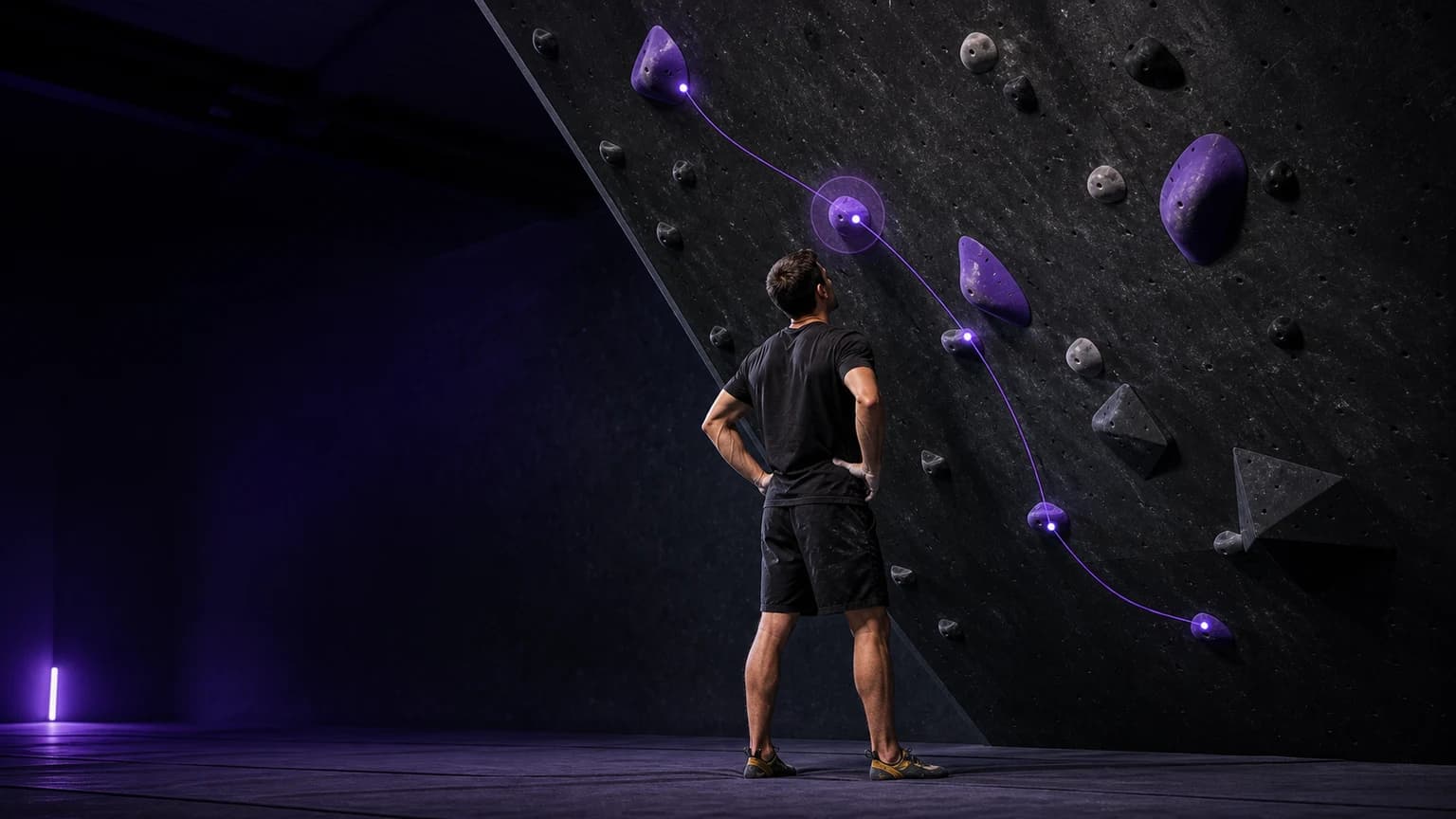
Answer first: project a boulder by making every quality attempt answer one question. Read the sequence and landing, name the biggest unknown, try one deliberate change, then record what actually happened. Rest until you can move with control again. Keep the change when it helps; replace it when the attempt gives you clear evidence. This loop produces more useful beta than repeating the full problem without a purpose.
Projecting means working on a problem that you cannot yet complete. You may need one session or several. The grade does not define a project: a V2 can become a useful project when it exposes an unfamiliar slab position, while a steeper V6 may suit your strengths. Choose a problem that lets you test a skill without accepting a landing you cannot control.
Start with the problem, not the attempt count
Before you pull on, check the start, finish, allowed holds and fall zone. Gyms use different start markers, colour circuits and finishing rules. Ask staff when a marker or boundary is unclear. Move bags, bottles and other loose objects away from the mats, and wait until nobody stands or climbs below you.
Then read the bouldering problem from the ground. Trace the likely hand sequence, but give every hand move a supporting foot and body position. Mark three points:
- Known: the positions you can already reach and control.
- Unknown: the first move where you do not know the foot, grip, hip direction or timing.
- Risk: a swing, awkward fall or crowded landing that changes whether you should try the move.
Do not prescribe a fixed number of attempts before you have identified the unknown. Ten identical tries can tell you less than one attempt that compares a different foot or hip position.
Work backward from the first failure
When you fall, resist the urge to judge the entire attempt. Find the earliest moment when the plan stopped matching the movement. Your hand may have left the final hold because your hips drifted away two moves earlier. Your feet may cut on an overhang because you reached before you loaded the toe, not because you need to pull harder.
Use a short note that separates observation from decision:
- Observation: “My right toe released as I moved my left hand.”
- Decision: “I will turn the right knee inward and load the toe before I reach.”
Change one important variable on the next comparable try. If you change the grip, both feet and tempo together, you will not know which choice helped. For a steep project, use the same principle alongside these overhang climbing techniques. If quiet placement fails first, practise that position with the footwork drills before you spend another full-power attempt.
Separate sequence, position and execution
A project often feels like one problem even when three different questions remain:
- Sequence: Which holds and feet will you use, and in what order?
- Position: Where will your hips, shoulders and centre of mass sit before the move?
- Execution: Can you apply the chosen movement with enough accuracy and control today?
Test the earliest unanswered question first. If you do not know the sequence, watching a permitted demonstration or trying a lower-cost variation may help. If you know the sequence but cannot hold the position, isolate that entry when the gym layout and rules allow it. If you can make every move separately but cannot link them, work on the transition before the crux and the place where you can breathe or adjust.
Route preview research offers useful context, not a guarantee. A small study of 18 climbers on an indoor top-rope route found differences in visual search and exploration between more and less fluent ascents. Bouldering is a different task, but the finding supports a practical habit: preview deliberately, then update your plan from what you feel on the wall rather than treating your first beta as correct.
Rest for another useful attempt
Start the next try when you can use your intended grip and foot placement with control. A clock cannot make that decision for every project. Hold size, wall angle, move intensity, session load and your own training history all change the recovery you need.
Use visible checks instead of chasing a universal rest formula. Can you brush and inspect the holds without rushing? Can you reproduce the starting position? Do your fingers, elbows and shoulders feel normal for you rather than painful or unstable? If fatigue makes your movement less deliberate, switch to observation, an easier drill or the end of the session.
Evidence on climbing load and overuse injury does not justify a single safe weekly volume for everyone. A systematic review found conflicting results across training-volume studies. Treat sharp, new or worsening pain as a reason to stop, not as project beta. A qualified healthcare professional should assess injury concerns, and a qualified coach can help with movement and load decisions that require in-person context.
Review one comparable attempt
Video helps when you give it the same narrow question as the climb. Place the camera only where the gym permits it, keep it off the fall zone and avoid recording other people without permission. Frame the full problem and landing when possible. Compare two attempts from a similar angle; do not infer a movement change from two completely different views.
The app cannot judge whether a landing is safe, replace a qualified coach or diagnose pain. Make those decisions before you record.
Use a simple project log
Keep the log short enough to use between attempts. Record:
- problem name or wall location;
- the gym’s grade or colour circuit—V grades, Fontainebleau grades and colour systems do not convert exactly;
- wall angle and movement style;
- the first unresolved move;
- one observation from the latest attempt;
- one change for the next attempt;
- whether you stopped because you sent, learned enough or lost quality.
Across sessions, begin by recreating the last reliable position instead of restarting the whole investigation. Recheck the holds because routes can feel different after brushing, wear or a reset. If the project changes or disappears, keep the lesson: the useful result may be a better heel placement, a calmer setup or a clearer way to test beta—not only the send.
Competition observation is a separate context
The 2026 IFSC rules define formal observation periods and what counts as an attempt in competition. Those rules can sharpen your attention, but a normal gym session is not a competition simulation. Follow the gym’s current rules for starts, filming, brushing, mats and shared space. Use competition constraints only when you intentionally train for them with appropriate supervision.
Your next action: choose one current project and finish this sentence before you climb: “This attempt will tell me whether…” After the attempt, write one fact and one change. That is enough to turn another try into useful beta.