Technique
Flagging in Climbing: Outside, Inside, and Reverse Flag Technique
Learn outside, inside, and reverse flags, choose the right counterbalance, and practise flagging without twisting away from the wall.
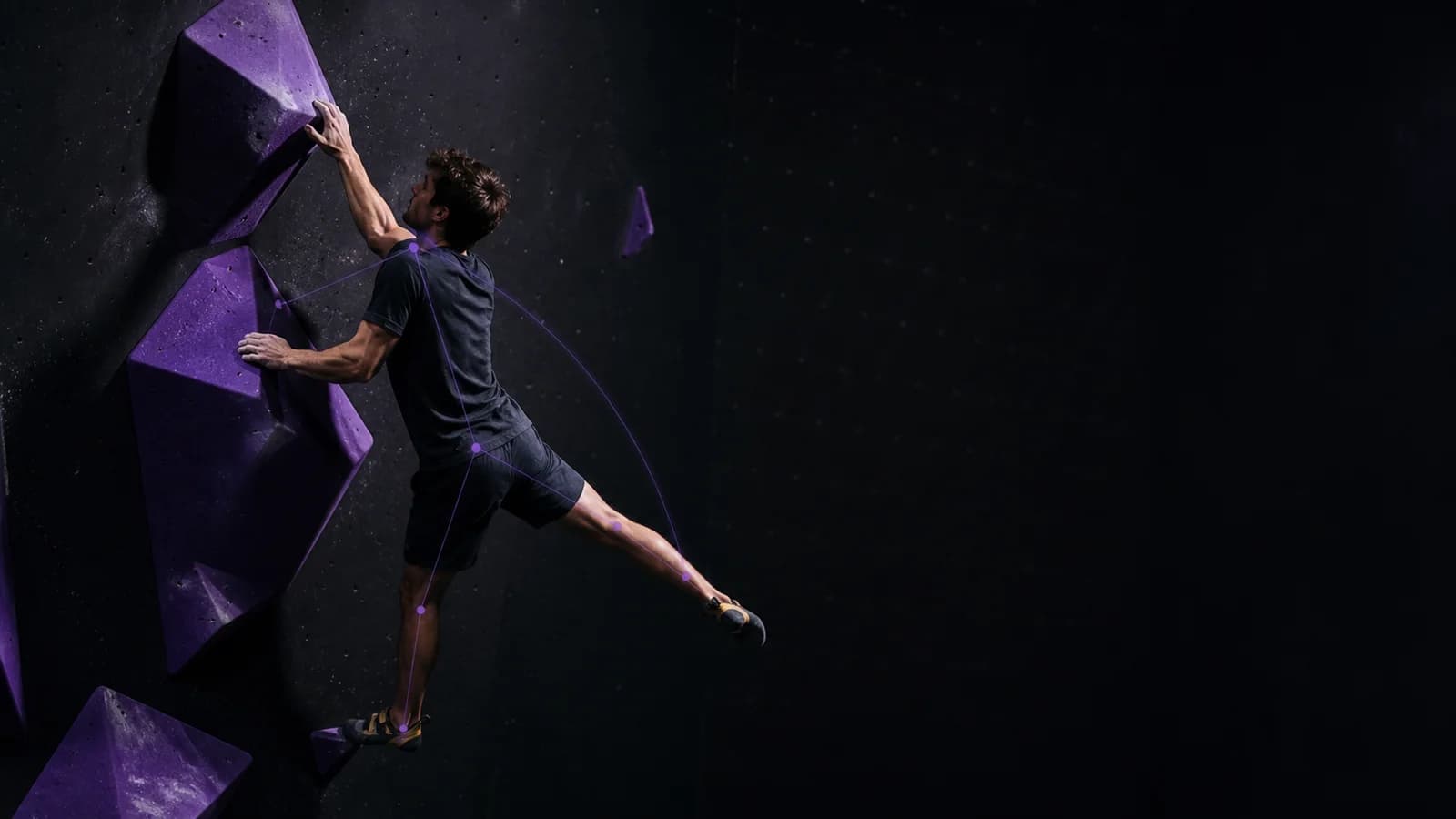
Flagging in climbing means extending a free leg to counterbalance your body while the other foot stays on a foothold. Use an outside flag when the free leg crosses behind the standing leg, an inside flag when it crosses in front, and a reverse flag when you need a stronger counterbalance across the wall. Keep the flagging foot free, move from the hip, and use only enough reach to keep your centre of mass over the foothold.
Practise low on an indoor wall with a clear padded landing. If you cannot control the position, step down and ask a qualified coach to check it.
What a flag actually does
A flag replaces a missing foothold with counterweight. Your standing foot and hands make the support points. The free leg moves your mass and resists the rotation that would otherwise peel a hip away from the wall.
Before you flag, ask which way your hips want to swing. Extend the free leg in the opposite direction. Do not press it onto a hold. If the free foot takes weight, you are using another foothold rather than flagging.
| Flag | Free-leg path | Useful when |
|---|---|---|
| Outside | Behind the standing leg | You need a simple counterbalance on the open side |
| Inside | In front of the standing leg | Crossing in front keeps the hips closer to the next hold |
| Reverse | Far across the body, usually behind | A long reach creates a stronger rotational pull |
Outside flag
Stand on the foothold nearest the direction of travel. Extend the other leg behind the standing leg and point the toe toward open space. Keep the standing knee soft and let the hip settle over that foot before you reach.
If the flagging leg swings after your hand moves, set it earlier. If you twist the standing knee, reduce the cross and turn the hip instead of forcing the foot.
Inside flag
Pass the free leg in front of the standing leg. This option can help when the free hip needs to stay near the wall or when an outside flag would collide with a volume.
Move slowly because the crossed position can feel crowded. Keep the standing foot active and make sure the knee follows the direction of the toes. Change the solution if the legs tangle or you cannot step down cleanly.
Reverse flag
A reverse flag uses a longer cross-body extension to resist a strong barn-door swing. It often appears during a reach when both hands and one foot sit on the same side of the body.
Start with a modest flag. Extend farther only when the move still rotates you away. A dramatic leg line is not the goal. Stable hips and a controlled hand movement are.
Four mistakes to fix
You kick the leg late. Place the flag before you unweight the reaching hand.
You press the free foot into the wall. Let it float. Use its mass rather than friction.
You lock the standing knee. Keep enough bend to organise the hip over the foot.
You hold the flag after the move. Once the new handhold stabilises you, bring the free foot to its next job.
Practise on easy terrain
Choose a low traverse with large handholds. Climb it three times using only outside flags, then repeat with inside flags where the shape allows. On the final round, pause before each reach and name the direction your hips would swing.
Record from behind and slightly to the side, outside the fall zone. Review whether the free foot floated, whether the standing knee tracked cleanly, and whether the hips moved before the hand.